


Transform Your Website into a Sales Funnel
Digital Marketing, Local Business Growth
Your Website Should Be a Sales Funnel
Not a brochure.
For many local businesses, the website still behaves like a glossy tri-fold brochure: pretty, static, and mostly ignored. In a digital-first world, that is a wasted opportunity. Your website should work like your best salesperson—capturing interest, qualifying leads, and guiding people toward a clear next step. In other words, it should be a digital sales funnel, not just an online business card.
Your Website’s True Objective: A Vehicle, Not a Vanity Project
Think of your website as a vehicle. Its job is to move strangers from “never heard of you” to “ready to buy” as smoothly as possible. A brochure-style site focuses on information: who you are, what you do, maybe a gallery and a map. A funnel-focused site is built around movement: each page intentionally nudges visitors to the next step in their buying journey.
For a local business—whether you run a dental practice, a landscaping company, a fitness studio, or a boutique—this shift in thinking is crucial. You are not just “putting your business online.” You are building a predictable system that generates and warms up leads even when you are busy serving customers or closing for the day.
The Heart of the Funnel: Lead Capture
A sales funnel cannot exist without lead capture. If your website doesn’t collect contact details, you are relying on visitors to remember you later—after they have checked three competitors and been distracted by life. That is risky at best, and usually expensive in lost opportunities.
Offer something valuable in exchange for an email or phone number: a free estimate, a discount, a quick “local buyer’s guide,” or a short checklist.
Place clear, simple forms above the fold on key pages—especially your home page, service pages, and landing pages from ads.
Reduce friction: ask only for the information you truly need to follow up effectively.
For example, a local plumber might offer “Instant quote within 15 minutes” with a short form requesting name, suburb, and type of issue. A yoga studio might invite visitors to “Grab your first class free” in exchange for an email and preferred class time. The goal is simple: don’t let interested visitors leave without a way for you to continue the conversation.
From Names to Opportunities: Lead Qualification
Capturing leads is only half the job. The next step in a digital sales funnel is qualification—figuring out which leads are most likely to become profitable, happy customers. A well-designed website can quietly do a lot of this work for you, saving your team time and focusing your energy on the right conversations.
Smart forms: Add one or two qualifying questions to your forms, such as budget range, timeline, or service type. This small detail can dramatically improve the quality of your pipeline.
Segmented follow-up: Use different thank-you pages or email sequences based on answers. A “ready to start this week” lead should not receive the same follow-up as someone “just researching options.”
Clear next steps: Offer options like “Book a call,” “Schedule a visit,” or “Get a detailed quote,” so serious buyers can move faster.
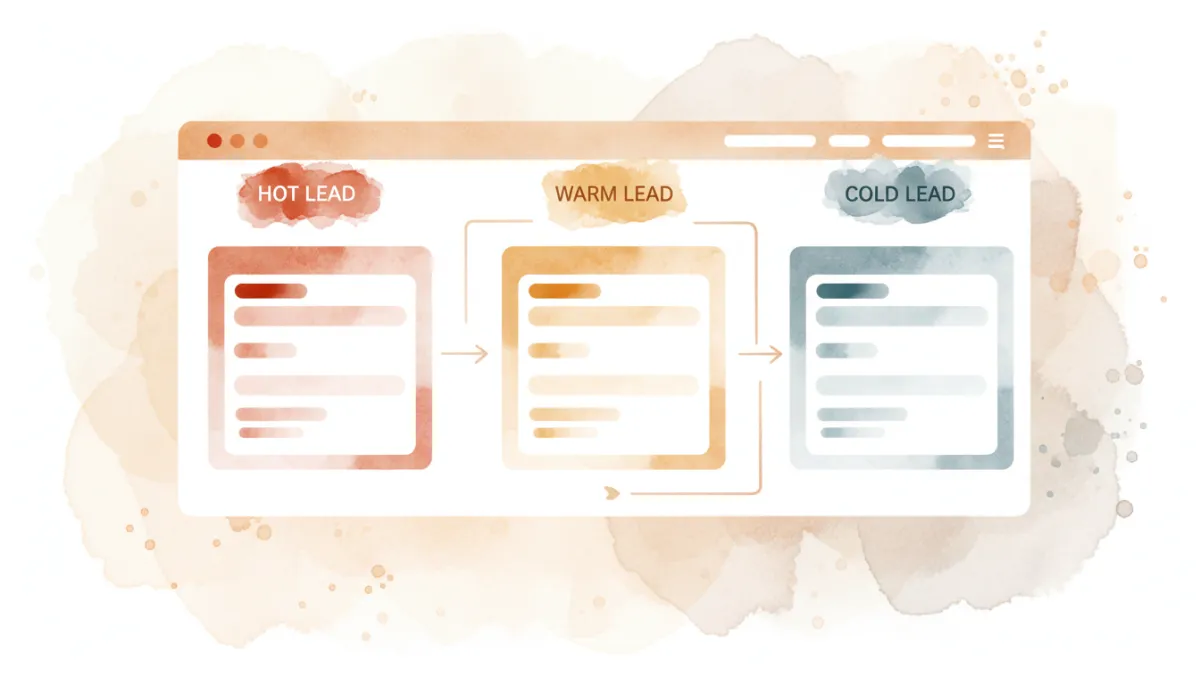
Simple qualification questions help local teams focus on the most ready-to-buy leads.
Imagine a home renovation company whose form asks about project type and budget range. Leads with larger, near-term projects can be flagged for a personal call within 24 hours, while smaller or long-term prospects receive helpful educational content that nurtures them over time. The website is quietly sorting and prioritizing, acting like a digital sales assistant.
The Category Shift: From “Website” to “Sales System”
This is where the real category shift happens. When you stop thinking of your presence as “a website” and start seeing it as “a sales system,” everything changes—how you design pages, what you measure, and where you invest your budget.
You no longer judge success by how “nice” the site looks, but by how many qualified leads it generates each week.
You stop chasing random traffic and focus on attracting the right visitors and guiding them through a clear path.
You treat your site as an active sales asset that deserves optimization, testing, and improvement—just like a top-performing salesperson.
📌 Key Takeaway: When you reposition your website as a sales funnel, you move into a different category than competitors who still treat theirs as static brochures. That shift alone can set your local business apart.
Putting It All Together for Your Local Business
Turning your website into a digital sales funnel does not require complex technology or a complete reinvention. It starts with a few strategic questions: How will we capture leads? How will we qualify them? What is the next step we want them to take? Every page, headline, button, and form should support those answers.
As you refine your site, measure what matters: number of leads captured, quality of those leads, and how many turn into paying customers. Over time, small improvements—simpler forms, clearer offers, better follow-up—compound into a powerful, always-on sales engine for your local business.
Your website can be more than a digital brochure. With intentional design around lead capture, thoughtful qualification, and a bold category shift from “online presence” to “sales system,” it can become the vehicle that consistently drives new, qualified customers through your door.
