

Scale Your Business with Automation Solutions
Operations, Local Business Growth
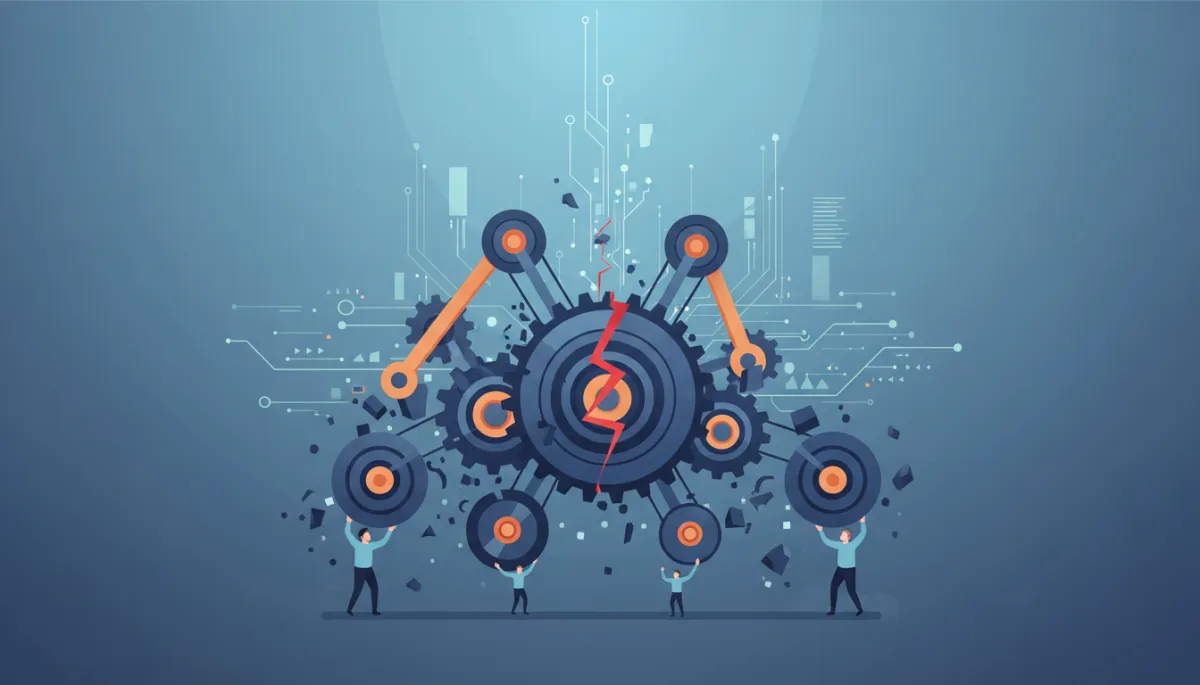
Manual Systems Break at Scale
Automation solves that.
The Hidden Cost of Doing Everything by Hand
Many local businesses grow on the back of manual systems: notebooks, spreadsheets, whiteboards, and the memories of a few key people. In the early days, this works. You know every customer by name, every order by heart, and every invoice by sight. But as your business grows, those same systems quietly become your biggest bottleneck. The very processes that once felt simple and flexible start to crack under the weight of increased demand.
This is a scale problem. What works for ten customers does not work for one hundred. What works for one location does not work for three. Manual systems fail not because people are lazy or careless, but because they are being asked to do what only structured, automated systems can do reliably at scale.
Human Limits: Why Your Team Can’t Be the System Forever
At the heart of every manual process is a person. And people, no matter how talented or dedicated, have natural limits. We get tired, distracted, sick, or pulled into emergencies. We misread handwriting, forget to update a spreadsheet, or accidentally skip a step when the phone is ringing and a customer is waiting at the counter. These are not character flaws; they are simply how humans work.
Attention limits: Staff can only track so many tasks, orders, and details in their head before something slips.
Memory limits: Relying on “I’ll remember” works at a small scale, but becomes risky as volume grows.
Time limits: There are only so many hours in a day to copy, check, and re-enter information manually.
When you depend on humans to be your “system,” growth exposes these limits quickly. Each new customer, order, or supplier adds more to remember, more to track, and more chances for mistakes. Eventually, your team spends more time managing the chaos than serving customers or improving the business.
The Scale Narrative: From Calm to Chaos in Three Simple Steps
Think about your business journey as a scale narrative—a story of what happens as volume increases. It usually follows the same pattern:
Stage 1: Manual feels easy. A few orders a day, one or two staff, simple processes. A notebook and a spreadsheet seem perfectly fine.
Stage 2: Growth stretches the system. You start getting busier. Staff are writing the same information in multiple places. Double-checking becomes a daily necessity. Small errors begin to show up—missed calls, lost orders, incorrect stock counts.
Stage 3: Manual breaks at scale. Suddenly, one busy week exposes everything. You oversell stock, forget follow-ups, or disappoint a loyal customer. Stress rises, and your team feels constantly behind, even though everyone is working harder than ever.
The story is the same whether you run a local retail shop, a service business, a clinic, or a small manufacturing operation. Manual systems do not bend gracefully; they snap. And they usually snap at the exact moment you most want to impress customers and capture new opportunities.

Replacing whiteboards and paper logs with automation removes chaos as demand grows.
Why Automation Wins as Your Business Grows
Automation is not about replacing people; it is about replacing fragile processes. Where manual systems rely on memory and repetition, automated systems rely on rules and consistency. They do the same thing, the same way, every time—no matter how busy the day gets.
Fewer errors at higher volume: Automated workflows capture information once and reuse it everywhere, reducing retyping and miscommunication.
Real-time visibility: Instead of hunting through notes and spreadsheets, you see up-to-date data in one place—stock levels, bookings, invoices, and more.
Scalable processes: Whether you handle 10 orders a day or 100, the steps stay the same, and the system does the heavy lifting.
💡 Pro Tip: Start by automating the one manual process that causes the most delays or complaints. Small wins build confidence for broader change.
From Surviving to Scaling: Building a Business That Can Grow
The real question for local businesses is not whether manual systems work today, but whether they will still work when you reach the next level of scale. If your goal is to add more customers, open another location, extend your service area, or simply reclaim your evenings from paperwork, manual processes will always hold you back.
Automation offers a different path. Instead of adding more people to fight fires, you design processes that prevent fires in the first place. Instead of relying on one “hero employee” who knows everything, you capture that knowledge in systems that anyone on the team can use. As your volume increases, your stress does not have to increase with it.
The Bottom Line: Superiority at Scale
Manual systems may feel familiar and comfortable, but their weaknesses appear exactly when success arrives. Human limits, increasing complexity, and rising customer expectations collide—and something breaks. Automated systems, by contrast, are built for consistency, reliability, and growth. They turn your scale narrative from a story of chaos into a story of control.
For local businesses that want to grow without burning out their teams or disappointing customers, the choice is clear: manual systems break at scale; automation solves that. The sooner you make the shift, the sooner your business can move from just keeping up to confidently moving ahead.
