


Automate Lead Capture for Smart Business Growth
Local Business, Automation, Lead Generation
Smart Businesses Automate Lead Capture
Manual systems don’t scale. If your team is still chasing scraps of paper, digging through email threads, or relying on memory to follow up with potential customers, you are putting a ceiling on your local business. The smart business model starts with one simple idea: automate lead capture so every opportunity is recorded, nurtured, and converted—without adding more chaos to your day.
The Hidden Cost of Manual Lead Capture
Most local businesses grow the same way: a great reputation, word of mouth, and a lot of hard work. But somewhere along the way, growth slows—not because the market shrank, but because the systems behind the scenes never evolved. Leads arrive through phone calls, walk-ins, social media messages, and website inquiries, yet many never make it into a single, reliable list. They live in inboxes, sticky notes, and staff members’ heads.
This is more than a minor inconvenience. Every missed or delayed follow-up is lost revenue. Every time a staff member forgets to call back, takes a message on the wrong pad, or mis-types an email address, your marketing dollars quietly leak away. Manual lead capture creates bottlenecks, inconsistency, and stress—especially when business picks up. Ironically, the better your marketing works, the more your manual processes break.
Automation: The Smart Business Model Foundation
At the heart of the smart business model is automation. Automation does not mean removing the human touch; it means building a reliable engine that supports it. When you automate lead capture, you ensure that every inquiry—no matter where it comes from—is instantly recorded and routed into a central system without someone having to type it in by hand every time.
Website forms that automatically add new contacts to your CRM or email list.
Call tracking numbers that log caller details and source campaigns.
Chat widgets and social DMs that sync directly into a single lead pipeline.
Instead of asking, “Did we write that number down?” you can ask, “Where is this lead in our process?” That shift—from guessing to knowing—is where smart businesses begin to separate themselves from the competition.
Systems Turn Random Leads into Predictable Revenue
Automation works best when it is part of a larger set of systems. A system is simply a repeatable way of doing something that does not depend on one specific person. In the context of lead capture, that means designing a clear, consistent journey every new contact follows—from first touch to closed sale or long-term nurture.
Capture: Every inquiry automatically enters a central database with contact details and source.
Respond: An instant confirmation email or text goes out, so prospects feel acknowledged right away.
Assign: Leads are automatically assigned to the right team member with clear next steps.
Follow up: Reminders and follow-up sequences ensure no one slips through the cracks.
With systems like these, your business stops relying on memory and heroics. New team members can step into defined roles. Owners can step out of the day-to-day without everything grinding to a halt. Most importantly, revenue becomes more predictable because the path from lead to customer is no longer random—it is designed.
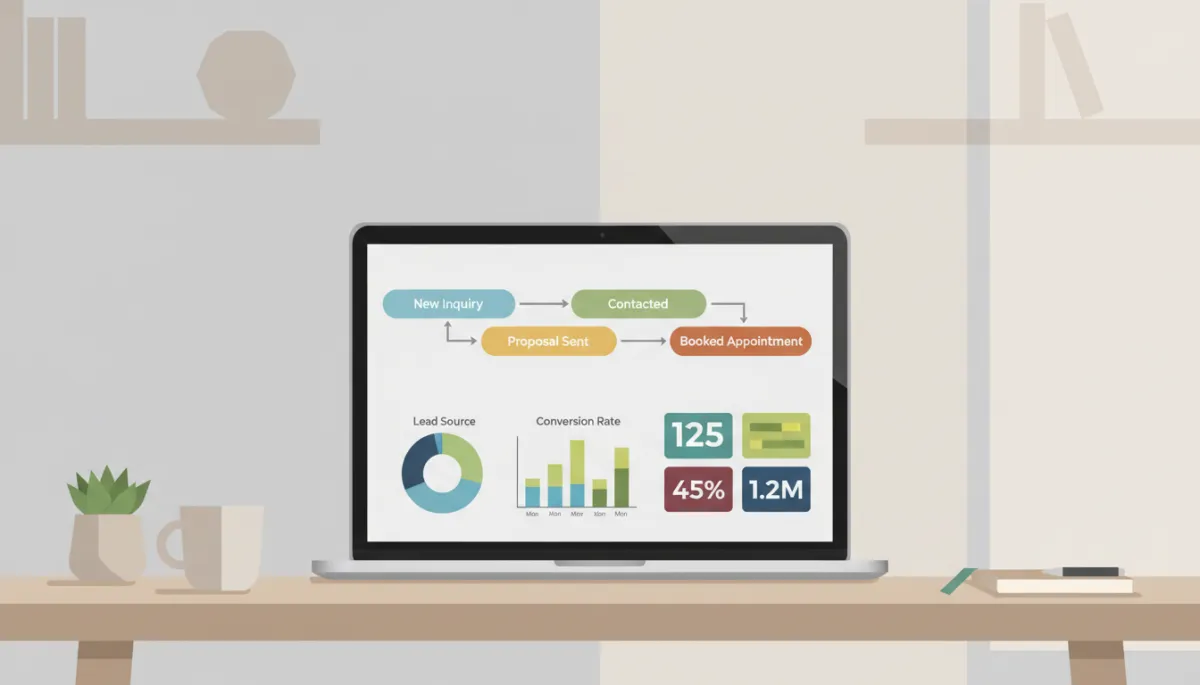
Clear lead pipelines help local teams prioritize follow-ups and protect revenue.
Scalability: Growing Without Adding More Chaos
Automation and systems together create scalability. Scalability means your business can handle more leads, more customers, and more revenue without needing to multiply your stress, hours, or headcount at the same rate. When lead capture is automated and your follow-up process is systemized, adding 30% more leads does not require 30% more effort; the infrastructure is already in place.
For a local business, this is a game changer. You can run bigger campaigns, expand into new neighborhoods, or add new services knowing your back-end can cope. Instead of slowing marketing when things get busy, you can confidently keep your foot on the gas because your systems are built to handle the load.
💡 Pro Tip: If a process breaks every time you get busy, it is a sign that it is not scalable yet. Look for ways to automate the repetitive steps first.
The Scalability Belief: Thinking Beyond Today’s To-Do List
Underneath the tools and tactics lies something deeper: the scalability belief. This is the mindset that your business is capable of serving far more people than it does today—if you build the right structure. Owners who hold this belief stop asking, “How can I get through today?” and start asking, “How would this work if we had twice as many leads?”
The scalability belief pushes you to design for the future, not just patch for the present. It encourages you to invest in automation, document your systems, and measure your numbers because you expect growth, not hope for it. When you believe your business can scale, you naturally look for leverage instead of more effort. That belief is what separates businesses that plateau from those that quietly, steadily expand year after year.
Getting Started: One Smart System at a Time
You do not need to rebuild your entire operation overnight. Start by choosing one high-impact area: lead capture. Map out every way a potential customer currently reaches you, then ask a simple question: “How can this be captured automatically in one place?” From there, layer in basic follow-up steps and reminders. As you see the benefits—fewer missed leads, more consistent revenue—you can extend the same approach to other parts of your business.
Smart businesses do not grow by accident. They grow because their owners commit to automation, build clear systems, and operate from a deep belief in scalability. When you automate lead capture, you are not just saving time—you are laying the foundation for a business that can finally grow as big as your ambition.
